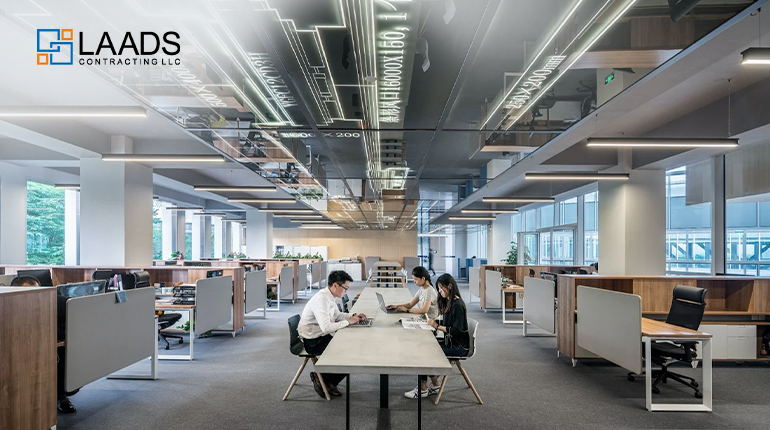
High costs for energy are one of the most significant continuing expenses incurred by office buildings. From lighting and air conditioning to elevators and electronic equipment, offices consume large amounts of electricity every day. With rising energy prices and increasing focus on sustainability. Therefore, building owners and facility managers must now seek smart construction techniques that will lead to real energy savings without sacrificing comfort or productivity.
Smart construction focuses on designing and building offices using energy-efficient materials, equipment, and systems from the initial planning process. If implemented properly, smart construction provides building owners with long-term savings from reduced operating expenses and lower energy consumption, along with a better overall indoor environmental experience for the employees.
In this article, we present the best practices for reducing energy consumption and decreasing monthly electrical bills through the use of smart construction.
Optimizing Building Orientation and Design
Smart energy efficiencies begin at the design phase. Proper orientation of the building encourages maximum exposure to natural daylight and minimizes the amount of heat absorbed.
Benefits of Optimal Orientation:
- It reduces the need for artificial lighting.
- It minimizes the cooling load in the summer.
- It allows for improved indoor comfort.
By considering things such as window positioning, shading devices, and reflective surfaces, a design can dramatically reduce energy use.
Using Energy-Efficient Building Materials
Choosing the right construction materials plays a major role in reducing energy bills.
Examples of these materials include:
- Insulating wall and roof systems
- Low Emissivity (Low-E) window systems
- Reflective roof systems
- Thermal insulation panels
Each of these products reduces energy costs by limiting heat transfer and reducing the workload for cooling equipment.
Smart Lighting Solutions
Lighting is one of the largest energy users in the office environment.
Smart lighting options include:
- Using LED lights in place of traditional light sources
- Utilizing motion sensors in the restroom and meeting areas
- Using daylight sensors to automatically adjust lighting levels
- Having zone control for lighting systems
These products use energy only when lights are needed, reducing unnecessary power consumption.
Energy-Efficient HVAC Systems
Heating, ventilation, and air conditioning are the largest energy users in office buildings.
Smart HVAC strategies are
- Using high-efficiency chillers and VRF systems
- Employing smart thermostats
- Utilizing zoned temperature control
- Conducting regular maintenance and monitoring
Smart HVAC systems are designed to adjust heating and cooling operations based upon occupancy, thereby conserving energy and maximizing occupant comfort.
Integrating Building Automation Systems (BAS)
Building Automation Systems integrate lighting, HVAC, security, and power systems into a single, smart network.
BAS provides the following benefits:
- Energy monitoring from a centralized location
- Automatic building shutdown after regular working hours
- Real-time performance measurement
- Reduced the amount of energy that is wasted
Automation creates opportunities for the optimal use of energy with no manual intervention.
Maximizing Natural Ventilation and Daylighting
The use of natural resources is one of the major goals of smart construction.
Some of the advantages include:
- Less need for artificial lighting
- Reduced cooling requirements
- Healthier indoor environment
- Increased employee productivity
Open-concept designs, glass partitions, and skylights increase air circulation and daylight in buildings.
Installing Solar Power and Renewable Energy Sources
Renewable energy solutions significantly reduce dependency on grid electricity.
Popular options:
- Rooftop solar panels
- Solar-powered lighting for common areas
- Battery storage systems
Even partial solar integration can lead to substantial savings over time.
Smart Power Management and Energy Monitoring
Energy monitoring systems provide insight into how people are consuming electricity as well as where and how much energy is wasted.
Key components include:
- Smart meters
- Energy dashboards
- Load balancing systems
- Peak usage alerts
With a data-driven approach, building managers can make informed decisions on how to best manage the use of energy in their buildings.
Water-Energy Efficient Systems
There is a direct correlation between how much water is used and how much energy is consumed.
Smart technologies include:
- Low-flow fixtures
- High-Efficiency water heating systems
- Rainwater harvesting systems
- Smart pumps
By reducing the amount of water used, consumers also reduce the amount of electricity consumed.
Long-Term Maintenance and Energy Audits
Smart construction does not stop when the building construction is complete.
Why is this important?
- Regular auditing of energy consumption allows for the identification of inefficiencies related to energy expenditure.
- Predictive maintenance through the use of smart systems reduces energy waste.
- Periodic upgrades to smart systems maintain a high degree of energy efficiency.
Long-term monitoring allows for continued savings and optimization of energy use year after year.
Being able to save on energy costs in commercial office environments is no longer seen as just a way to cut business expenses; it’s now seen as a smart, sustainable investment for the future. Implementing smart design strategies, such as implementing energy-efficient building materials, using smart lighting systems, using the latest technologies for HVAC systems, utilizing building automation systems, and integrating renewable energy sources, are some of the best ways for commercial office buildings to reduce their operational expenses, increase comfort, and improve sustainable practices.
For any business that is looking to create a new, energy-efficient commercial office, LAADS is recognized as the most trusted construction company in Dubai, UAE, specializing in constructing commercial office buildings. LAADS combines the latest construction techniques with sustainable building solutions to create functional, appealing, and energy-efficient commercial offices that ultimately provide long-term savings from reduced energy bills.